Georgia Life Sciences Names 2025 Golden Helix Award Winners

Academic Innovators and Industry Leaders to be Honored at the Georgia Life Sciences Summit 

August 12, 2025 - The Georgia Life Sciences Golden Helix Awards celebrate excellence and achievement across Georgia’s life sciences ecosystem, recognizing the individuals, companies, and institutions making significant contributions to scientific discovery, health innovation, and economic growth in the state and beyond. 


This year’s winners will be honored at the welcome reception and awards ceremony on day one of the Georgia Life Sciences Summit, August 26-27 at the Sandy Springs Performing Arts Center.


We are pleased to announce this year’s slate of 2025 Golden Helix Award winners: 


PHOENIX AWARD: Boehringer-Ingelheim / University of Georgia  for the Sustainable Development Excellence Certificate Program 

This award, sponsored by the Metro Atlanta Chamber, celebrates an industry/academic collaboration, or other allied partnership, that demonstrate strength, tenacity, and leadership. Like the mythical phoenix, together they exemplify how strategic partnerships can accelerate discovery, fuel commercialization, and create meaningful impact for patients and communities. 


INNOVATION AWARD: Myomatrix

Presented to an institution, team, or individual whose innovation goes beyond the traditional paradigms and has the potential to significantly impact human health, agriculture, or environmental sustainability. Eligible innovations may include—but are not limited to—advancements in biotechnology, pharmaceuticals, diagnostics, medical devices, digital health, or life science-related AI and data platforms. 


DEAL OF THE YEAR AWARD: 

  • Andson Biotech (Private Financing), biotools company revolutionizing sample preparation for mass spectrometry workflows, for closing a $3.6M seed round led by industry veterans and expanding from three to ten employees while launching its DynaChip X1 platform into commercial markets. 
  • Micron Biomedical (Private Financing), for securing $16M to expand manufacturing of its needle-free vaccine delivery technology and advance multiple vaccine candidates toward commercialization.
  • Moonlight Therapeutics (Private Financing), or closing its first equity round, Series A, co-led by Portal Innovations, to advance its novel intradermal allergen immunotherapy platform for treating food allergies, beginning with MOON101 for peanut allergy.
  • Synaptrix (Private Financing), a medical device company developing the groundbreaking NOVABLOC™ system for drug-free postoperative pain management, for raising $13M in Series A funding led by Hatteras Venture Partners to support pivotal studies, regulatory submission, and commercialization.
  • ANI Pharmaceuticals (Acquisition) for its definitive agreement to acquire Alimera Sciences, for $453M, expanding its global footprint and portfolio to three commercial rare disease assets.
  • Stryker (Acquisition), for its definitive agreement to acquire Artelon, expanding its portfolio of soft tissue fixation solutions for orthopedic surgeons.
  • Duracell (Economic Development), for selecting Georgia as the site of its new North American R&D headquarters, further strengthening the state’s life sciences and advanced manufacturing ecosystem. 

Presented to a company or institution who has made the most significant transaction of the year (between January 1, 2024-March 31, 2025), a deal that exemplifies strategic vision, market influence, and long-term value creation. Whether it’s a transformative partnership, acquisition, licensing agreement, IPO, or major funding round, this deal represents a defining moment for the companies involved and a milestone for the state’s biotech ecosystem.  


COMMUNITY AWARD:

  • ARCS Foundation – Atlanta
  • Jeffrey Gray, Founder and CEO, AgeTech Atlanta
  • Christopher Kunney, Managing Partner and Digital Transformation Strategist, IOTech Consulting, LLC
  • Lisa Middleton, Ph.D., Director, Scientific Affairs, Georgia Cancer Center/Augusta University

Presented to a life sciences organization or individual that has demonstrated continuous commitment to making a positive, lasting impact on their local community. This award recognizes organizations/ individuals that go beyond their day-to-day operations through career development initiatives, outreach programs, patient advocacy, corporate philanthropy, or other significant community contribution.


EMERGING LEADER OF THE YEAR AWARD: Benjamin Siciliano, PhD, Radyus Research 

Presented to an individual in the first decade of their career whose achievements are significantly contributing to or transforming the life sciences industry. 


TEACHER OF THE YEAR AWARD: Amanda Barrett, Marietta High School 

Presented to a Georgia biotechnology high school teacher who exhibits innovative teaching, mentorship, and unwavering dedication to inspire the next generation of thinkers, problem-solvers, and future leaders in STEM/ biotechnology.


LEGISLATOR OF THE YEAR AWARD: Senator Chuck Hufstetler, 52nd District, Rome

Honors select legislators in recognition of their leadership in advancing federal and state policies to promote life sciences research, investment, and innovation. 


Winners are selected by the Golden Helix Awards Committee, a select group of leaders from Georgia’s life sciences, academic, and business communities who are responsible for identifying and recommending the most impactful individuals, companies, and organizations for recognition at the Golden Helix Awards. The committee reviews nominations across categories including scientific advancement, public policy, entrepreneurship, education, and community impact, aligning with the mission of the Golden Helix Awards to honor those whose ideas and achievements are leading the way in health and science.

To register for the summit, click here.

November 20, 2026
GLS President & CEO joins state legislators from across the country to examine the intersection of drug pricing, patient access and life sciences innovation. Georgia Life Sciences (GLS) continues to elevate Georgia’s voice in national healthcare and life sciences policy discussions, with President & CEO Maria Thacker-Goethe participating as a featured panelist at the Women In Government 2026 Leadership & Innovation Summit, held November 17–20 in Savannah, Georgia. The summit brings together women state legislators and policy leaders from across the country to explore pressing policy issues and share perspectives as they prepare for their 2027 legislative sessions. Thacker-Goethe joins a panel titled Examining the Long-Term Impact of Most Favored Nation (MFN) Drug Pricing Policies on Patients, Providers & Biopharmaceutical Companies, alongside Sharon Lamberton , Deputy Vice President of State Policy & External Outreach at PhRMA , and Kathy Oubre , CEO of Pontchartrain Cancer Center . The discussion is moderated by Oklahoma State Representative Cindy Roe . Representing the state life sciences ecosystem perspective, Thacker-Goethe will explore the broader implications of drug pricing policies, including their potential impact on: Research, development and the commercialization of new treatments Biopharmaceutical manufacturing and capital investment Job creation, workforce development and state economic competitiveness Patient access to innovative medicines and future therapies As policymakers seek to address healthcare affordability, GLS believes it is essential to consider the interconnected nature of healthcare policy, scientific innovation and economic development. Participation in this national forum reflects GLS’s ongoing commitment to bipartisan policymaker education, constructive advocacy and ensuring that the life sciences industry has a meaningful voice in shaping public policy. As Georgia and other states prepare for their 2027 legislative sessions, GLS remains committed to serving as a trusted resource for policymakers and fostering a policy environment that supports patients, innovation and economic growth. Learn more about the Women In Government 2026 Leadership & Innovation Summit . Read more about MFN from BIO: Simplify the System .
November 4, 2026
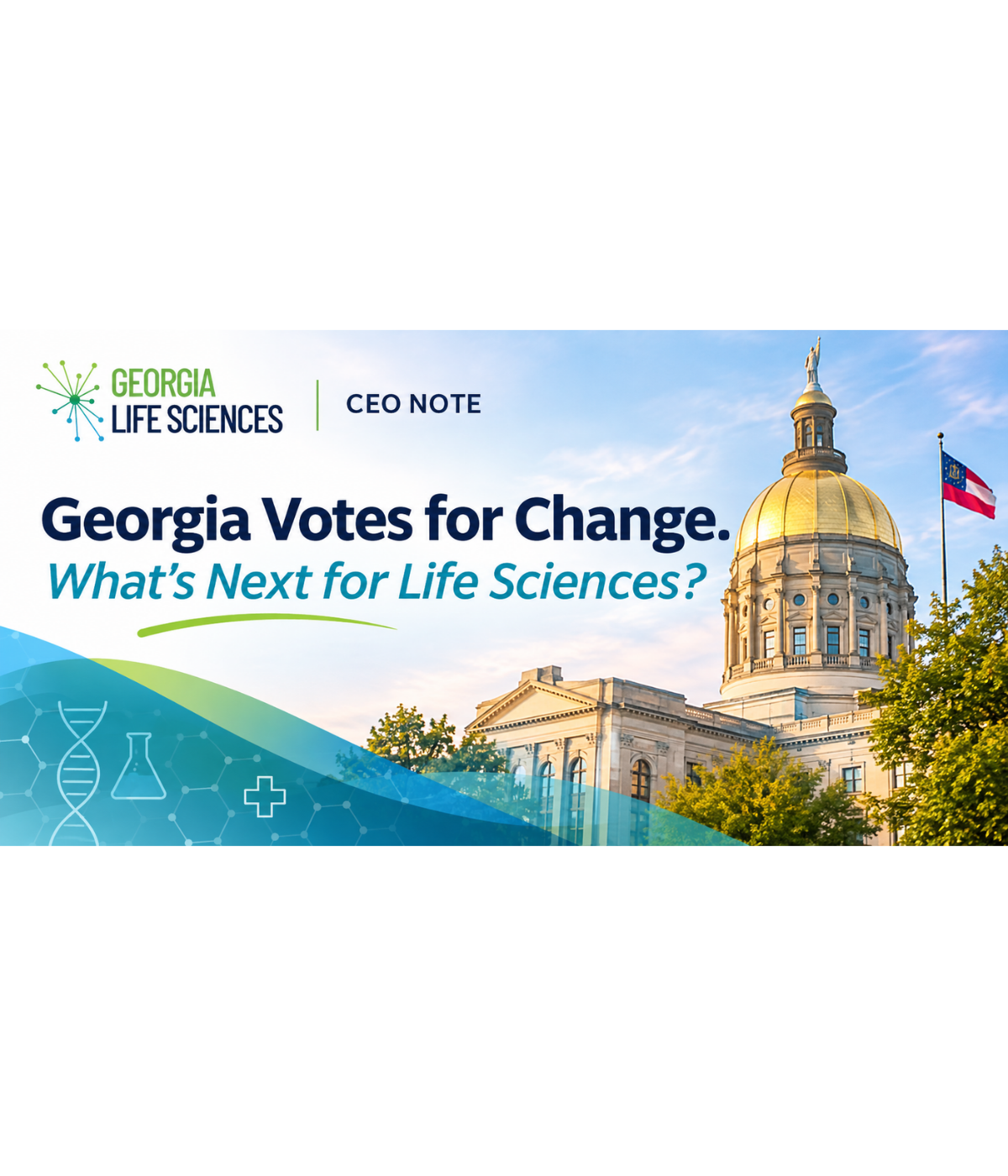
CEO Note: A New Political Landscape, A Continued Commitment to Georgia Life Sciences Georgia's 2026 election results mark a historic shift in the state's political landscape, setting the stage for a new administration, new statewide leadership, and a potentially changed balance of power in the General Assembly as we approach the 2027 legislative session. At the national level, Democrats won control of both chambers of Congress , creating a new dynamic for federal policymaking. With the presidency remaining under Republican leadership, the coming years will require bipartisan cooperation to advance legislation. Changes in congressional leadership and committee oversight could significantly affect healthcare, federal research funding, FDA policy, drug pricing, and patient access. The most significant changes for our industry, however, are happening here in Georgia. Keisha Lance Bottoms' victory in the gubernatorial race marks a historic transition in state leadership, ending more than two decades of Republican control of the Governor's Office. She will also become the first Black woman elected governor in U.S. history. Democrats also swept Georgia's statewide executive offices , including lieutenant governor, attorney general, secretary of state, and the commissioners responsible for agriculture, labor, and insurance. These leadership changes create new opportunities for engagement on the policies and investments that shape Georgia's economy. In the General Assembly, Democrats made substantial gains and appear positioned to take control of the Georgia House of Representatives , pending final results in several close races. Republicans retained a narrowed majority in the State Senate. This potentially divided legislative environment will require thoughtful engagement and collaboration across party lines. We can also expect considerable turnover in the General Assembly, with dozens of new legislators beginning their terms in January. Along with a new Governor and incoming administration, this creates an important opportunity to introduce policymakers to Georgia's life sciences industry, its economic contributions, and its potential for future growth. What Does This Mean for Georgia's Life Sciences Industry? Life sciences is an economic development priority that should transcend party lines. Our industry's growth depends on a combination of sound public policy, private investment, research, workforce development, infrastructure, and a business environment that encourages innovation and commercialization. As Georgia establishes its new leadership priorities, several areas will be particularly important: Economic Development and Manufacturing: Positioning Georgia to attract and retain biopharmaceutical, biotechnology, and MedTech companies while advancing the infrastructure and capabilities needed to support scale-up manufacturing. Research and Commercialization: Strengthening connections between Georgia's research institutions, emerging companies, investors, and industry partners to move discoveries from the laboratory into commercial applications. Workforce Development: Expanding investment in technical education, apprenticeships, and industry-aligned training to prepare Georgians for the growing range of life sciences careers. Capital and Investment: Improving access to capital and supporting programs that help Georgia-based companies grow, commercialize technologies, and remain competitive. Healthcare Innovation and Patient Access: Supporting an environment that encourages medical innovation, advances research, and improves patient access to new treatments and technologies. These priorities align directly with Pathways & Partnerships: A Roadmap for Georgia's Life Sciences Sector , our ten-year strategy to position Georgia as a leading scale-up manufacturing hub in the Southeast. Georgia enters this transition with both an opportunity and a clear need to strengthen its competitiveness in life sciences. The recently released BIO/TEConomy report highlights the industry's significant contributions, including more than 42,600 jobs across over 4,200 establishments, while reinforcing the opportunity for Georgia to accelerate growth relative to other states. Our Roadmap provides a foundation for working with policymakers to turn these opportunities into sustained investment, stronger industry partnerships, and high-quality jobs throughout Georgia. GLS's Role Moving Forward For Georgia Life Sciences, this transition reinforces the importance of our role as the industry's statewide voice and convener. We will be intentional about building relationships with the incoming administration, new legislative leadership, returning legislators, and state agencies. We must ensure that policymakers understand not only the healthcare implications of our industry, but also its broader economic impact: high-quality jobs, significant research investment, advanced manufacturing, innovation, and opportunities for communities across Georgia. At the federal level, we will continue working with our national partners and Georgia's congressional delegation to advocate for policies that sustain research and innovation, support a predictable regulatory environment, strengthen American biomanufacturing, and advance patient access. With a new administration and many new legislators, we have an opportunity to establish a stronger understanding of what it takes to build and sustain a competitive life sciences ecosystem. That means bringing industry leaders to the table, communicating our priorities, identifying areas of bipartisan alignment, and advocating for policies that support long-term growth. Our industry's success requires a long-term commitment that extends beyond any election cycle or administration. The political landscape may change, but our commitment to advancing Georgia's life sciences industry remains constant. We look forward to working with leaders on both sides of the aisle to ensure Georgia continues to be a place where life sciences companies can innovate, invest, manufacture, and grow.
October 30, 2026
For Georgians living with serious and rare diseases, how quickly and predictably a new treatment moves through U.S. Food and Drug Administration (FDA) review can make a real difference. That predictability also matters to the researchers and businesses that make up Georgia’s growing life sciences sector. Both depend in large part on the Prescription Drug User Fee Act (PDUFA), a longstanding bipartisan program that Congress needs to reauthorize by 2027. How PDUFA Works Since 1992, PDUFA has allowed the FDA to collect user fees from biopharmaceutical companies to supplement the agency’s resources for reviewing new medicines. In exchange, the FDA commits to clear, predictable review timelines. The agency’s standards for safety and efficacy remain unchanged. By providing additional resources and establishing clear performance goals, PDUFA helps ensure patients can access new treatments in a more timely and predictable manner. The result of PDUFA have been significant. Before PDUFA, FDA reviews often took more than two years. Today, the median review time is 10 months for standard applications and 8 months for priority applications. In 2025, nearly 70% of new medicines were approved in the U.S. before any other country. What’s at Stake in 2027 Congress reauthorizes PDUFA every five years. The current agreement, PDUFA VII, expires September 30, 2027. Timely reauthorization is critical to maintaining the FDA’s review capacity, preserving regulatory predictability, and ensuring patients continue to benefit from medical innovation. Georgia stakeholders recently came together to talk through what that means here at home. On October 28, Georgia Life Sciences, the MTS Sickle Cell Foundation, and Georgia First hosted “PDUFA: How Medicines Reach People,” a lunch-and-learn at Brookhaven City Centre. Patient advocates, congressional staff, and business and academic leaders heard from Nick Magallanes of Todd Strategy Group, Natalie Crawford of Georgia First, Maria Thacker-Goethe of Georgia Life Sciences, and Mapillar Dahn of the MTS Sickle Cell Foundation. What We Heard At the event, speakers came at PDUFA from different angles, but the common thread was how the program affects Georgians. Mapillar Dahn of the MTS Sickle Cell Foundation stressed that patients need to remain at the center of conversations. As a mother of three daughters with Sickle Cell Disease, Mapillar stressed that she wants the FDA to have what it needs to carry out a thorough review without unnecessary delays. The confidence families place in a treatment depends in part on confidence in that process. Natalie Crawford with Georgia First and Mended Hearts spoke about the need for a fully resourced FDA so that Georgia patients have access to innovative treatments and also for a healthy Georgia economy. Additionally, Maria Thacker-Goethe spoke to what PDUFA reauthorization means for Georgia’s booming life sciences sector. She warned that without PDUFA reauthorization, research across the board will be stifled – ranging from devastating impacts to small startups to significant delays in investments and research. Part of a National Conversation As Congress prepares for the 2027 reauthorization, conversations like these help bring together patients, advocates, and community leaders to highlight the real-world importance of the program. Decisions made in this reauthorization cycle will shape FDA resources and review timelines nationwide. By reauthorizing PDUFA on time, Congress can make sure the FDA can keep reviewing new medicines efficiently and patients in Georgia and across the country can get the treatments they need. 
MORE POSTS