As the leading advocate for the state’s dynamic and diverse life sciences sector, Georgia Life Sciences promotes policy development, community programs, industry initiatives, and events, as well as the research and products of its associated member and partner organizations. 

Policy & Advocacy

Georgia capitol

Advance life sciences innovation through policy and advocacy leadership at all levels of government

Workforce & Talent

Workforce

Establish Georgia as a center for excellence in life science workforce training and talent development

Economic Development

Economic development

Provides expert advice and guidance to help companies find suitable locations and resources as they move to and grow in Georgia

Entrepreneurship

Innovation

Connecting innovators and companies to the resources that accelerate growth —strategic collaboration and partnerships across Georgia’s life sciences ecosystem

Networking

Networking

Foster connection by convening thought leaders around relevant industry topics and peer-to-peer exchange opportunities

Cost Savings

Cost savings

Curated discounts on products and services critical to running a successful business

Upcoming Events

Recent News
July 8, 2026
Wednesday, July 8, 2026 - Georgia Life Sciences is encouraged by the recent federal court decision issuing a preliminary injunction that prevents Colorado from implementing its upper payment limit for Amgen’s Enbrel, a patented treatment for rheumatoid arthritis and other autoimmune conditions. The ruling underscores a critical concern for the life sciences sector: state-level price controls, particularly those applied to patented medicines, raise significant legal questions and can create uncertainty for the innovation ecosystem that supports the development of new treatments. Colorado’s Prescription Drug Affordability Board had sought to impose the nation’s first upper payment limit on a specific prescription medicine. While the goal of improving affordability for patients is important and shared across the healthcare ecosystem, government-set price caps are the wrong approach. They risk undermining investment in biomedical innovation without guaranteeing that savings will reach patients at the pharmacy counter. As more states consider Prescription Drug Affordability Boards with authority to impose upper payment limits, policymakers should proceed with caution. These boards can add costly and complex layers of bureaucracy while creating uncertainty for companies working to discover, develop, manufacture, and deliver new therapies. To date, PDABs have not demonstrated that they meaningfully lower out-of-pocket costs for patients. GLS supports policies that improve affordability and access in ways that directly benefit patients. Rather than pursuing government-set price controls, policymakers should focus on reforms that address the real drivers of patient costs, including ensuring manufacturer rebates are passed through to patients, increasing transparency across the drug supply chain, promoting competition through generics and biosimilars, and expanding affordable insurance coverage. Patients need solutions that lower costs where they feel them most, at the pharmacy counter. Georgia Life Sciences will continue to advocate for patient-focused policies that improve access, preserve innovation, and support a strong life sciences ecosystem. Source: The court blocked Colorado’s first-in-the-nation Enbrel UPL through a preliminary injunction, with the cap set to take effect in January 2027. More here: https://www.reuters.com/legal/litigation/judge-blocks-colorados-first-of-its-kind-price-cap-amgens-enbrel-2026-07-01/
July 6, 2026
Regionally specialized innovation ecosystem partnerships to serve as nodes of university research excellence and engagement with Historically Black Colleges and Universities and Minority-Serving Institutions ALEXANDRIA, VA, July 6, 2026 —America’s Innovation Agency, the U.S. Patent and Trademark Office (USPTO), in furtherance of its statutory obligations under the Unleashing American Innovators Act (UAIA) of 2022, today announces the selection of Georgia and Alabama innovation ecosystem partnerships in response to its recent Request For Comment to further the agency’s Community Engagement Office expansion to include the Southeast region. The selection of Georgia and Alabama will focus particularly on Historically Black Colleges and Universities (HBCUs) and Minority-Serving Institutions (MSIs). Beginning with the Mountain West region announcements of Montana and Utah Community Engagement Offices, the USPTO reimagined its university partnership footprint to build an agile model of meeting innovators where they are, and more importantly, driving commercialization, manufacturing, and marketplace adoption. The Southeast Community Engagement Office expansion will include regionally specialized innovation ecosystem partnerships anchored in Georgia and Alabama, reflecting distinct regional strengths spanning commercialization, entrepreneurship, branding, aerospace, advanced manufacturing, engineering, and strategic technologies. As robust engines of invention and innovation, HBCUs receive more than $810 million of federal research and development funding, according to the National Science Foundation’s National Center for Science and Engineering Statistics (NSF-NCSES). Indeed, innovation at HBCUs is vast, cutting across a wide spectrum of science and technologies including medicine, engineering, aerospace, advanced manufacturing, defense technologies, and the physical sciences. Across America, university research and breakthroughs fuel our nation’s leadership not only in innovation but also in commercialization, manufacturing, and technology. The innovation ecosystem partnership announced today helps connect HBCUs and MSIs directly to the engines of entrepreneurship, advanced manufacturing, strategic technologies, and economic growth. The partnerships announced today provide robust hubs where researchers, innovators, and funders can help translate research into real-world impact and in turn drive the next generation of American ingenuity and stronger infrastructure to ensure American innovation is developed, commercialized, and scaled in the United States. The Georgia and Alabama innovation ecosystem partnerships will carry out the strategic direction of the USPTO’s Office of Public Engagement and ensure the USPTO’s initiatives and programs are tailored to each community’s unique ecosystem of industries and stakeholders. The ecosystem partnerships will work closely with intellectual property (IP) practitioners and services, startups, commercialization initiatives, and job-growth accelerators. They will also collaborate with local STEM organizations on outreach and educational programming. Georgia In Georgia, the USPTO will work with universities in the Atlanta University Center Consortium (AUCC–Clark Atlanta University, Morehouse College, Morehouse School of Medicine, Spelman College) and the Center for Black Entrepreneurship (CBE–founded by Spelman, Morehouse, Black Economic Alliance Foundation, and Bank of America) which has a national reach with its experiential Launch Incubator for Traction (LIFT) program. The USPTO will work with the AUC-GRANTED Initiative which has a collaborative approach to expand the research support and service capacity, including technology transfer. The Georgia ecosystem partnership will emphasize commercialization, entrepreneurship, branding, startup ecosystems, and innovation acceleration. "Clark Atlanta University is honored to be selected for this USPTO innovation ecosystem partnership, which recognizes the critical role HBCUs play in America's innovation leadership—from research and invention to commercialization and economic impact," said Clark Atlanta University President George T. French, Jr., Ph.D. Dr. French continued, "For too long, HBCU innovators have faced barriers in accessing resources to protect intellectual property and scale breakthrough ideas into viable enterprises. This partnership directly addresses that gap by connecting our researchers, students, and faculty to the full spectrum of support—from patent protection to startup acceleration to manufacturing pathways," French adds. "This is about ensuring HBCU-driven innovation translates into ventures, jobs, and wealth creation while strengthening America's competitive edge globally." Dr. Mark Lee, Senior Vice President for Academic Affairs and Provost at Spelman College said, "Spelman has a long-standing legacy of fostering academic excellence and empowering Black women to lead and innovate on a global scale. This partnership with the USPTO provides our students and the broader Atlanta University Center community with vital resources to protect their intellectual property, cultivate their entrepreneurial talents, and turn groundbreaking ideas into real-world impact. Our focus remains entirely on equipping the next generation of innovators with the tools they need to thrive and build lasting legacies." Kendrick Brown, Ph.D., Provost and Senior Vice President of Academic Affairs offered, "At Morehouse, we prepare men not only to lead in their fields but to own what they create. The USPTO's investment in the Atlanta University Center Consortium reflects a shared commitment to ensuring that HBCU students, researchers, and entrepreneurs have direct access to the intellectual property systems that protect innovation and generate economic opportunity. This partnership strengthens our capacity to connect academic excellence to real-world commercialization, and we are proud to be part of it." Dr. Grant Warner, the Executive Director of the CBE who has dedicated his career to implementing new opportunities for Black entrepreneurs, particularly at HBCUs said, "It is an honor to be selected as a site for a USPTO Community Engagement Office engagement partnership. It will allow us to take our programming to the next level with respect to both innovation and branding." Alabama In Alabama, the USPTO will work with Alabama A&M University and the broader Huntsville-area innovation ecosystem, including stakeholders connected to aerospace, advanced manufacturing, defense technologies, space commercialization, and STEM workforce development. Huntsville serves as one of the nation’s leading strategic technology corridors with substantial federal research, engineering, and commercialization activity connected to NASA’s Marshall Space Flight Center, Redstone Arsenal, and the region’s advanced manufacturing and aerospace sectors. "Alabama A&M University has a long-standing commitment to building partnerships that advance innovation, research, and economic opportunity. Establishing a U.S. Patent and Trademark Office presence on campus will provide students, faculty, and small businesses with greater access to intellectual property resources and expertise. Such access also serves to drive economic growth in this region and transform research into real-world solutions," stated AAMU President Dr. Daniel K. Wims. The Alabama ecosystem partnership will emphasize strategic technologies, aerospace, advanced manufacturing, engineering, and commercialization connected to federal and national-security-adjacent innovation ecosystems. "A USPTO presence at AAAMU creates new opportunities for our students, faculty, and businesses. It also more effectively moves innovative products and services from offices and laboratories to the marketplace," said Dr. Majed El-Dweik, Vice President of Research and Economic Development. These offices will collaborate with existing Southeast-based USPTO program participants like the USPTO Patent Pro Bono Program which provides free patent legal assistance. Georgia PATENTS (Georgia) and Gulf South Invents are the local program participants. The USPTO also imagines that the agency’s existing HBCU-based law school clinics in the Southeast at North Carolina Central University School of Law and the Southern University Law Center will be able to support and enable these innovation ecosystems. The purposes of these ecosystem partnerships, as stated in the UAIA of 2022 include: 1. To partner with local community organizations, institutions of higher education, research institutions, and businesses to create tailored community-based programs that provide education regarding the patent system and promote the career benefits of innovation and entrepreneurship 2. To educate prospective inventors, including individual inventors, small businesses, veterans, low-income populations, students, rural populations, and any geographic group of innovators that the Director may determine to be underrepresented in patent filings, about all public and private resources available to potential patent applicants, including the patent pro bono program The decision on the Georgia and Alabama ecosystem partnerships were based on the following criteria: 1. Robust research activity and graduate-level programs of study in areas which lead to innovations, IP, and IP-intensive companies/industries 2. Availability and concentration of existing commercialization and business development resources (Innovation Ecosystem) 3. Ability to support all innovators, as set forth in UAIA, Sec. 104(b)(3) Today’s announcement furthers the USPTO’s plan to develop and advance specialized engagement partners as engines of opportunity, growth, and global competitiveness. With specialized nodes of university research excellence as active partners, the USPTO is building a nationwide infrastructure comprising nodes of American ingenuity with start-up, university, incubator, manufacturing, advanced technology, and innovation-ecosystem communities as its lifeblood. America’s Innovation Agency congratulates and welcomes its new partners.
View All News

Become a Member Today

Winter Membership Drive
Become a Member

Member Benefits

Be Part of Our Growing Community

By joining Georgia Life Sciences, you will be part of a vibrant community that is making significant strides in growing the bioscience industry in our state. We conduct economic development activities; advocates on behalf its members on public policy matters; educates the public about the benefits of life sciences research and product development; and provides a network for idea exchange and cooperation.

Leverage the Power of Georgia Life Sciences: Become a Sponsor

Georgia Life Sciences’ sponsorships unlock unparalleled access and influence within the state’s life sciences industry. Go beyond traditional event sponsorships and engage directly with a multifaceted ecosystem through our combined reach across exclusive programming, key initiatives, events, media channels, and industry association networks.

DOWNLOAD

Why Join Georgia Life Sciences?

Membership in Georgia Life Sciences connects you with all facets of

our sector and helps cement your place in a community that shares the vision of improved health and a better world. We are the unified voice among key stakeholders and leading convenor for partnerships and strategic collaborations.
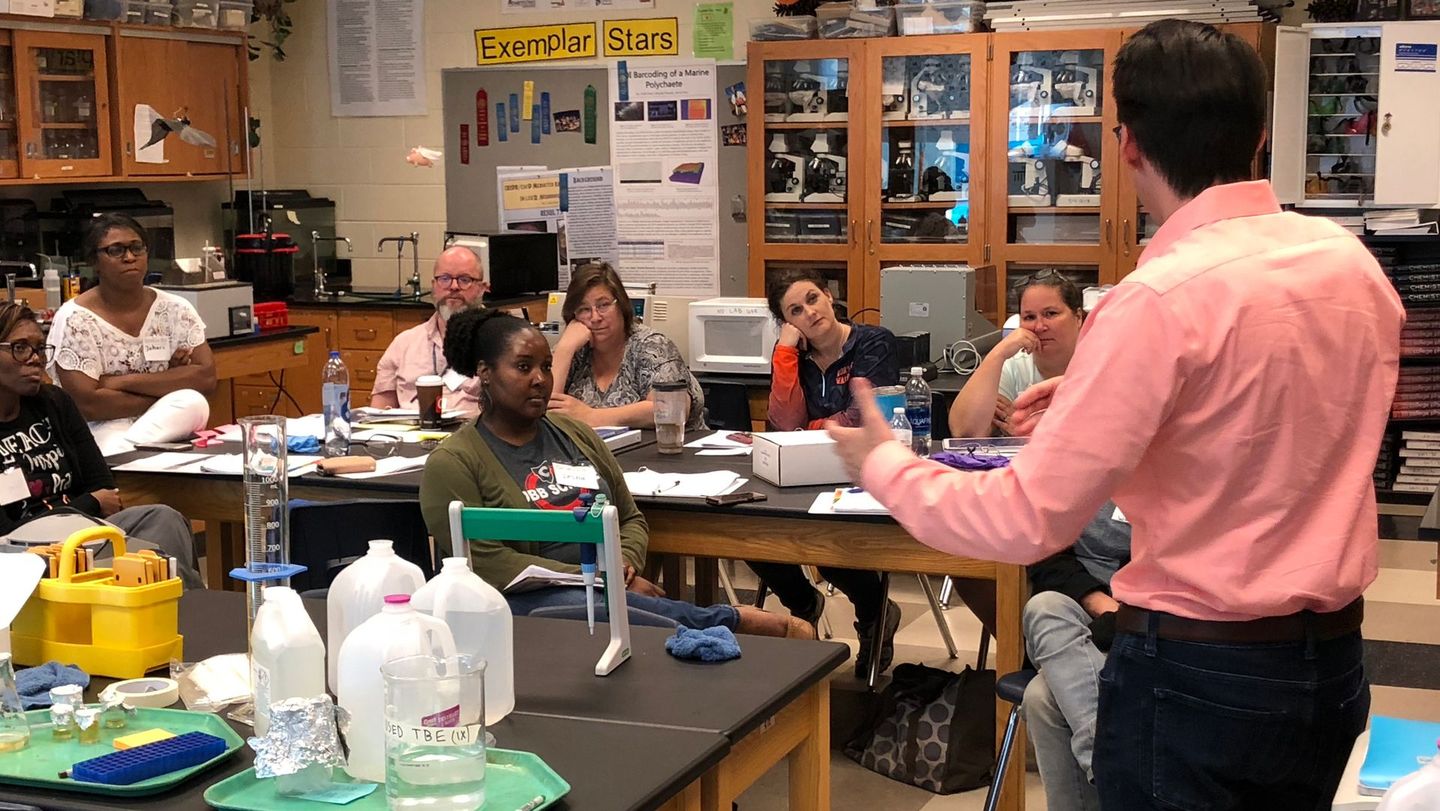

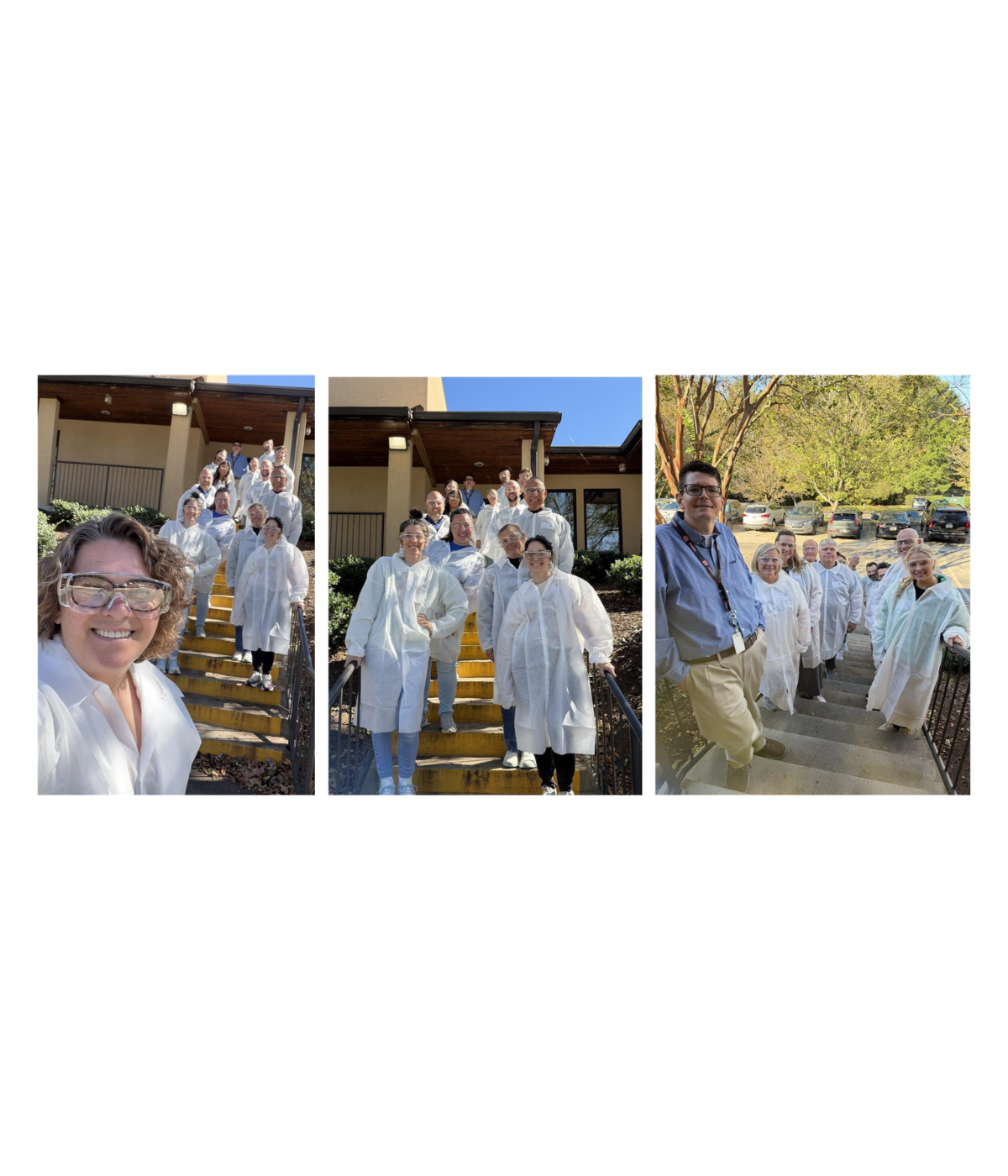
Teachers receiving instruction for a new lab and lesson plan

Biotech Teacher Training Initiative

Hands-on, immersive science teacher professional development for Georgia teachers.

Learn More

Equipment Depot

Provides grade 6-12 teachers with laboratory supplies and equipment needed to prepare students for careers in the life sciences.

Learn More

Ambassadors Program

Connects educators, students, and industry professionals to inspire the next generation of STEM leaders for the life sciences sector.

Learn More