Life Sciences Industry Partners Host Interns from Athens Community Career Academy Biomanufacturing Program.

Athens Bioscience, Inc. recently hosted an intern from the Athens-Clarke County Academy (ACCA) Biomanufacturing Program, a workforce development initiative created through partnerships among local industry, county and state leaders, educators, and Georgia Life Sciences.


“We’ve got many large (biomanufacturing) corporations here in (Athens-Clarke) County,” ACCA Biotechnology Instructor Stan Harrison said. “They need skilled workers and they need them from all walks (of life).”


As the program matures, students engage in internships at local industry sites to learn real-world applications for what they have learned through the Biomanufacturing pathway. Learning outcomes include not only the traditional biotechnology framework, but also automation and engineering fundamentals crucial in today’s biomanufacturing settings.
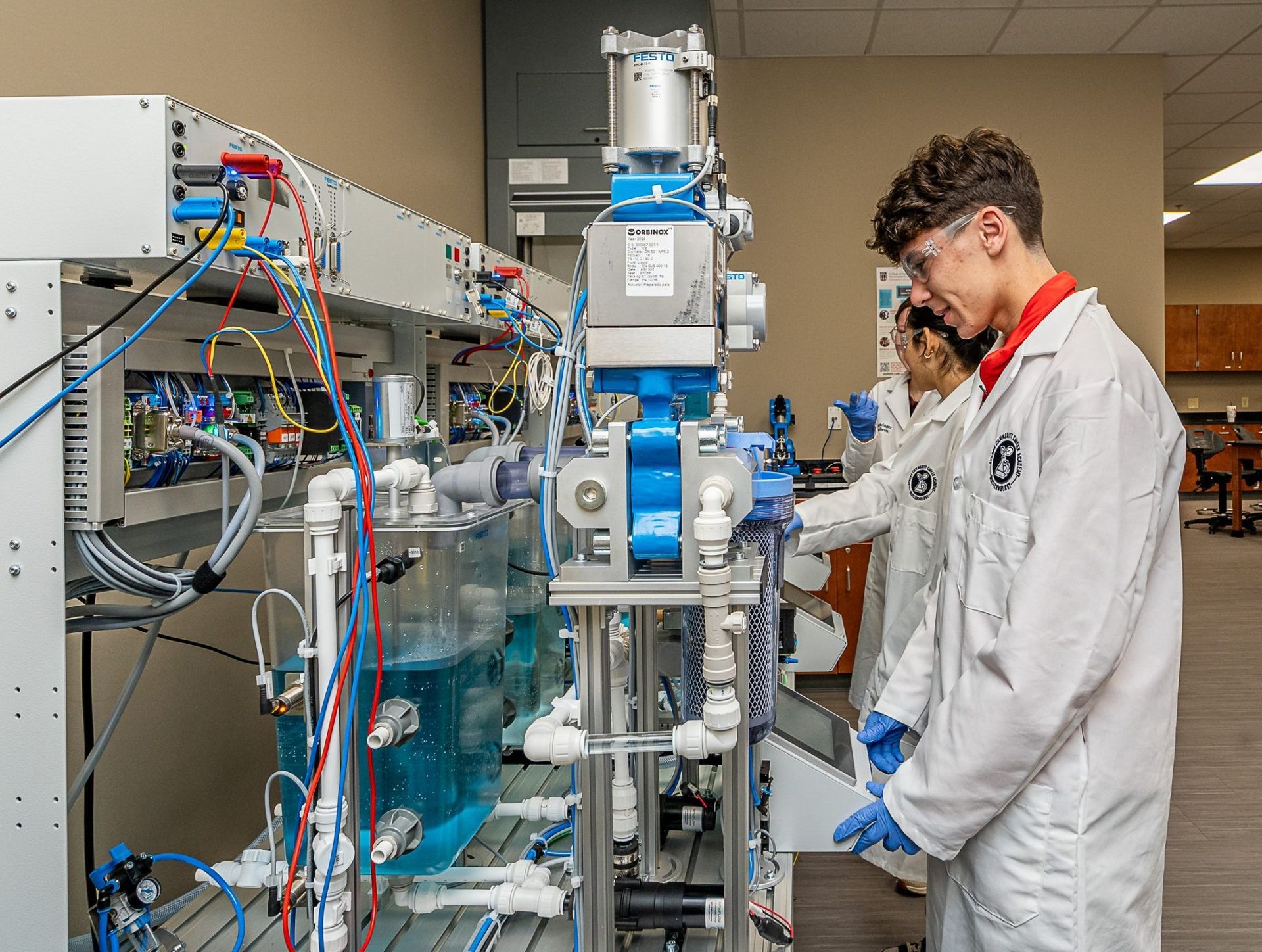

Interns at Athens Bioscience, Inc. participate in protein production and learn the commercial application of upstream and downstream biomanufacturing. It is programs and collaborations like these which will bring a well-prepared workforce into the life science industry of tomorrow.


“As biomanufacturing continues to grow in Georgia, developing skilled talent locally is more important than ever. These students are gaining experience with the same concepts, processes, and technologies used throughout the industry today, said John Mitchell, CEO, Athens Bioscience.


Georgia Life Sciences and the Georgia Life Sciences Institute supported the ACCA Biomanufacturing pathway by helping align the program with industry workforce needs, advising on program development, and connecting educators with local life sciences employers.
August 21, 2026
Genetic Engineering & Biotechnology News (GEN) has named Georgia #4 among its “Next 5 States” for emerging U.S. biopharma clusters . The article highlights UCB’s planned $2 billion investment at in Gwinnett County, Micron Biomedical’s new Alpharetta facility, Manus Bio’s expansion in Augusta, Science Square, Emory University, the CDC — and Georgia Life Sciences’ 10-year Life Sciences Roadmap . This recognition is exciting. But even more importantly, it validates the work happening across our entire ecosystem — and perfect momentum as we head into the 2026 Georgia Life Sciences Summit next week. Read more by visiting: Next 10 U.S. Biopharma Clusters
August 17, 2026
Biotechnology Innovation Organization (BIO) Senior Vice President of Science & Regulatory Affairs Annetta Beauregard issued the following statement on the release of the Prescription Drug User Fee Act (PDUFA) VIII commitment letter: “For more than 30 years, PDUFA has helped deliver hundreds of new medicines to American patients. As a lead industry negotiator for the PDUFA VIII agreement, BIO supports the PDUFA VIII commitment letter and its strengthening of regulatory review, advancing innovation, and helping deliver safe and effective treatments to patients. “Specifically, the PDUFA VIII agreement includes important commitments that bolster the FDA’s core review activities, ensure accountability for predictable performance, improve financial sustainability and improve communication, transparency and efficiency. “Timely, bipartisan reauthorization of PDUFA is vital for protecting the health of Americans, strengthening U.S. competitiveness, and maintaining America’s global leadership in medical innovation. BIO is committed to working with Congress to ensure reauthorization by September 30, 2027.” The FDA has announced plans to hold a hybrid public meeting at 9am on 9/16 to discuss the proposed enhancements for the reauthorization of PDUFA for fiscal years (FYs) 2028 through 2033. Learn More about PDUFA and the PDUFA VIII commitment letter HERE .
August 17, 2026
Representing Georgia’s life sciences community, GLS emphasized the importance of advancing policies that improve affordability and patient access while preserving the environment necessary for continued biomedical innovation. In its comments, GLS urged CMS to maintain a framework grounded in FDA regulatory determinations and raised concerns about how certain proposed policies could affect post-approval research and development, investment in new indications, and patient access to innovative therapies. GLS also encouraged CMS to consider the broader implications for healthcare delivery, including the potential impact on patients and providers in rural and underserved communities. As federal drug pricing policy continues to evolve, Georgia Life Sciences will continue to advocate for approaches that balance affordability, access, and innovation while ensuring Georgia’s life sciences community has a voice in the policymaking process. Read Georgia Life Sciences’ full comments to CMS ( click here ).
MORE POSTS